
Understanding the Model

Green banks are economic accelerators that unlock private capital and invest returns into projects that benefit people and the environment.
How Do Green Banks Transform Markets?
A green bank is a mission-driven public finance institution that uses innovative financing to remove market barriers and accelerate investments toward projects that produce economic, environmental, and health benefits for communities.
Despite the name, a green bank isn’t a bank—it doesn’t take deposits or manage savings. Instead, it uses a blend of public, philanthropic, and private capital to invest in clean energy, water, infrastructure, and technology projects that traditional lenders often overlook. By recycling profits back into new projects, green banks act as economic accelerators, driving private investment, creating jobs, and building cleaner, healthier communities.
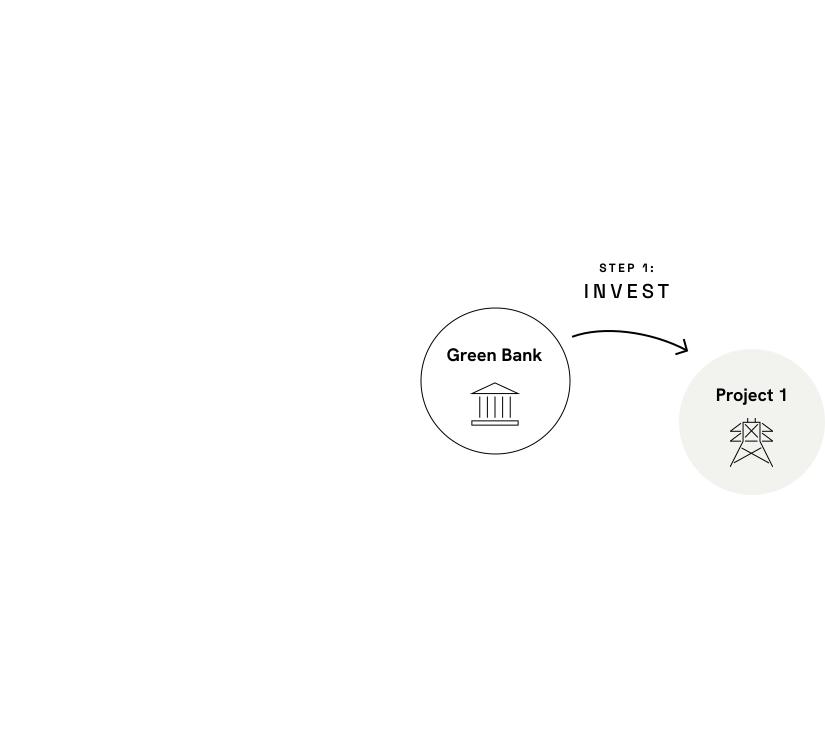

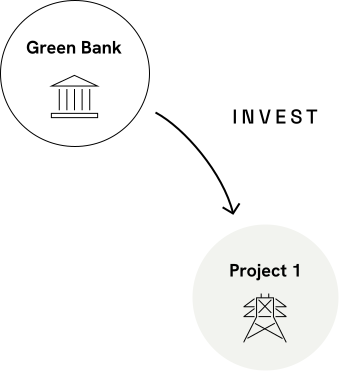
As mission-driven finance entities, Green Banks invest directly in clean energy, water, and resilient infrastructure projects.
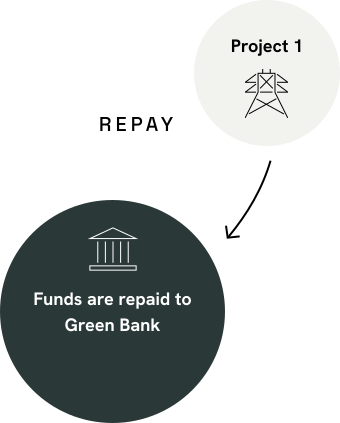
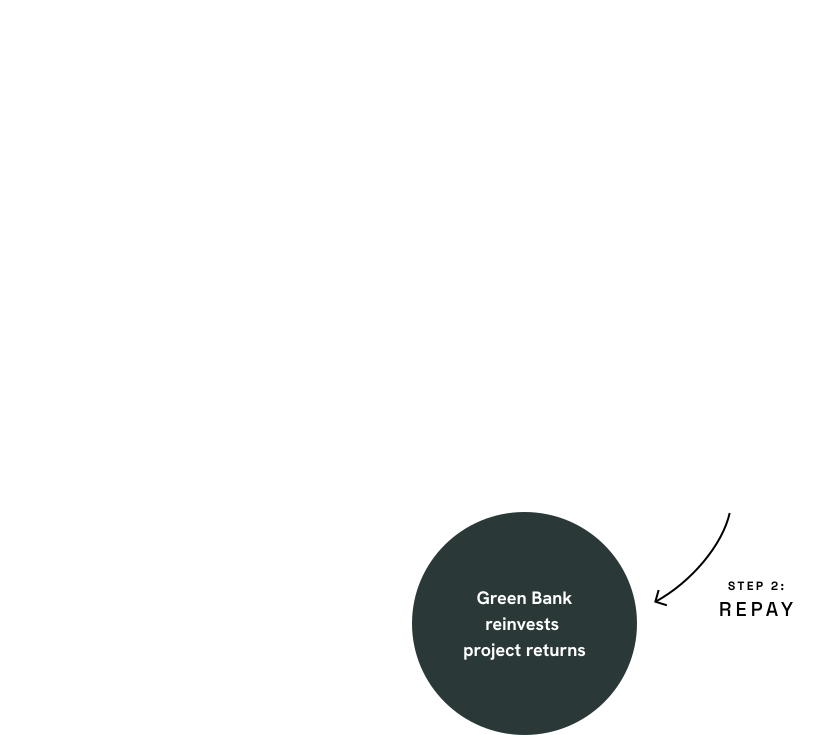
As projects generate revenue, funds are repaid and recycled so that investment can continue flowing where it’s needed most.
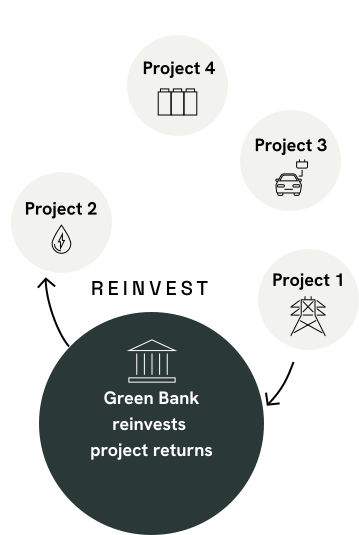

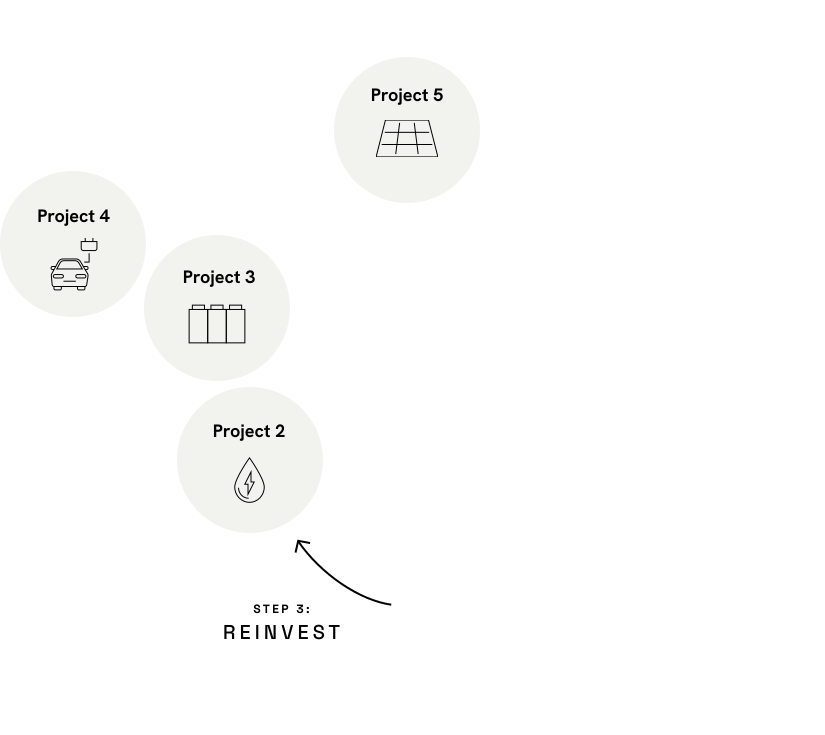
Those repaid dollars are reinvested into the next round of projects, amplifying returns, accelerating growth, and multiplying impact.
How Are Green Banks Created?
Green banks can be created in several ways. They are most commonly established through legislation or executive action that creates a new public or quasi-public entity such as the Connecticut Green Bank or the New York Green Bank within the New York State Energy Research and Development Authority (NYSERDA). Through this approach, green banks receive initial funding through appropriations, bonding authority, or federal programs. Green banks can also be formed as independent 501(c)(3) nonprofits, like Michigan Saves, which are governed by their own boards and capitalized through philanthropic, state, local, and federal grants.
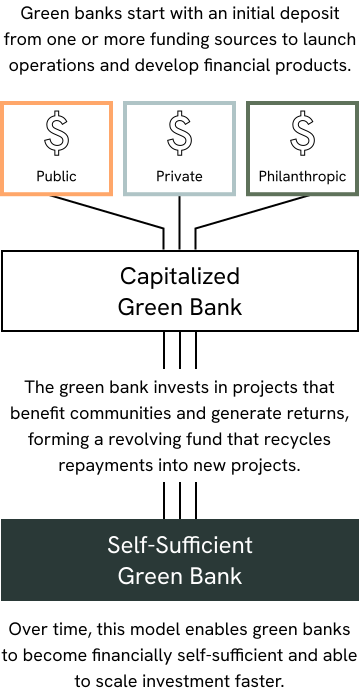
Public and quasi-public models benefit from stable seed funding and strong government backing that signal credibility to private investors, although they may face constraints if public funding is disrupted. Nonprofit green banks may be able to operate with greater agility and can respond quickly to market opportunities, though finding sufficient seed capital can be challenging. Across all structures, early funding from public, philanthropic, or private sources is essential: it enables the institution to launch operations, design financial products, and build lending systems, while forming the core of a revolving fund that recycles repayments into new projects—multiplying impact, reducing risk, and accelerating clean-energy investment over time.

Common Characteristics of Green Banks

Green banks combine public, private, and philanthropic funds to close financing gaps—making possible the kinds of projects that no single funding source could support alone.
They develop standardized financing structures that make investments in clean energy and infrastructure easier to replicate, lowering risk and attracting more private capital.
By bundling smaller or first-of-its-kind projects into larger portfolios, green banks make investments more efficient and cost-effective for investors.
Green banks focus on projects that generate returns. As those investments are repaid, the funds are recycled into new projects—creating a continuous cycle of reinvestment and expanding impact over time.
While green banks vary in structure and scale, they share a common mission: to deliver community-focused investments that build stronger economies and cleaner, healthier communities nationwide.
History of Green Banks
The term “green bank” emerged in 2008–2009 during efforts to stimulate economic recovery while reducing emissions through large-scale clean energy investment. At the time, the private sector viewed clean energy as risky, while public institutions lacked the capital to fund this emerging sector at scale.
The concept of a national green bank, introduced in federal legislation, envisioned an institution that would serve as an economic accelerator to scale proven clean energy solutions and create a new industry of good-paying jobs for Americans. When federal attempts failed, CGC built a nationwide movement to prove the effectiveness of this model, underscoring the need for a durable financial institution capable of bridging market gaps and attracting private capital to finance clean energy and infrastructure projects at scale.

CGC’s Partner Network
$25.4B mobilized
Since 2011, CGC and its network of partners have demonstrated the effectiveness of the green bank model. Through public-private investing, the network has mobilized more than $25 billion in clean energy investments—lowering energy costs, creating jobs, and delivering cleaner air and water to communities across the country.

53% invested
in communities where residents have lower income levels, are more likely affected by environmental challenges and burdened by pollution.
Frequently Asked Questions
Find answers to common questions about CGC’s work, impact, and how to partner with us.
No. A green bank is a mission‑driven financial institution that designs financing to invest in clean energy, energy efficiency, battery storage, water, and resilient infrastructure.
Grants are one-time spending. Green banks use financing and revolve dollars so as loan repayments come back, they can be reinvested, allowing the same public and philanthropic capital to support many generations of projects. Most green banks use grants as seed funding to kickstart their operations and as catalytic tools to pilot new technologies or financial products until there’s enough data and performance history to attract private capital.
No. They enable it—by reducing risk and standardizing products so private lenders can participate and bring project deployment to scale.
Green banks come in a variety of structures: some are public or quasi-public entities, while others operate as independent nonprofits—but all are mission-driven institutions that deploy innovative financing to serve people, markets, and the environment.
Public green banks are created and operated by government, which provides strong oversight but less flexibility to respond quickly to market conditions, while quasi-public and nonprofit green banks are more independent: quasi-public institutions are government-created but operate with private-sector agility, and nonprofit green banks are privately governed and offer the greatest flexibility to meet market needs.
Green banks typically start with public seed funding, whether appropriated through legislation or awarded through a grant. They grow by blending public, private, and philanthropic capital to finance projects that traditional lenders often overlook. Over time, green banks become financially self-sufficient.
Contact Us
Connect with us for more information, including investment and partnership opportunities, our initiatives, and ways to advance our mission together.